Why Bach's D Major Fugue Sounds Like Musical Whiplash (and Other Fun Facts)
About This Video
A playful, fact-packed look at Bach’s Fugue in D major, BWV 532 — the live-cut recording with a mysterious credit — full of trivia, oddball anecdotes, and surprising modern connections.
Narrative Script
Meet the piece: Bach’s Fugue in D major, BWV 532 — or at least a lively "live cut" of it floating around with the enigmatic filename onclassical_demo_latry_bach_fugue_in_d_major_bwv-532_live_cut-version and the performer listed as Unknown. The filename tip-of-the-hat to “Latry” sparks the imagination (if you know organ lore you’ll think of Olivier Latry and the great French organ tradition), but the real star here is the music: bright, nimble, and packed with contrapuntal fireworks. Think of it as a baroque sprint on an enormous set of pipes.
What is a fugue, anyway? In the friendliest terms: it’s a musical conversation where one voice announces a catchy phrase (the subject), and other voices politely interrupt, echo, argue, and then all refuse to stop talking until order is restored. BWV 532’s subject is upbeat and insistent — by the time the pedals join in you’ve got basslines doing acrobatics while the manuals trade melodies like bantering siblings. Listening tip: try to pick out the subject and hum along each time it pops up; you’ll feel like a detective in powdered wigs.
A few delicious Bachian tidbits: Johann Sebastian had a wicked sense of humor (enter the Coffee Cantata, a miniature opera about coffee addiction that treats caffeine like a romantic rival), fathered a musical dynasty with nearly twenty children (several became composers in their own right), and once walked some 250 miles to study with the organist Buxtehude — now that’s dedication to apprenticeship. He was also a fearless improviser; many of his organ performances were one-off spectacles. The modern tradition of grand, improvisatory organ playing — the kind you might imagine in a live cut of BWV 532 — is a direct descendant of that culture.
And the modern hooks keep coming. Bach’s counterpoint lives on in electronic remixes, film scores, and even in synth-pop projects like Wendy Carlos’s Switched-On Bach, which showed that baroque lines could sound futuristic. Producers borrow fugue-like techniques when they layer motifs across a track, and film composers use fugue textures to chase, suspense, or comic chaos. So the next time you hear the piping, bustling energy of BWV 532, remember: you’re part of a 300-year conversation that hops from candlelit churches to coffeehouse gossip to neon dancefloors. Here’s a playful dare — listen once and count how many times the subject returns. Then brag to a friend that you’ve solved a tiny bit of musical mystery.
Scene Gallery
Scene Descriptions
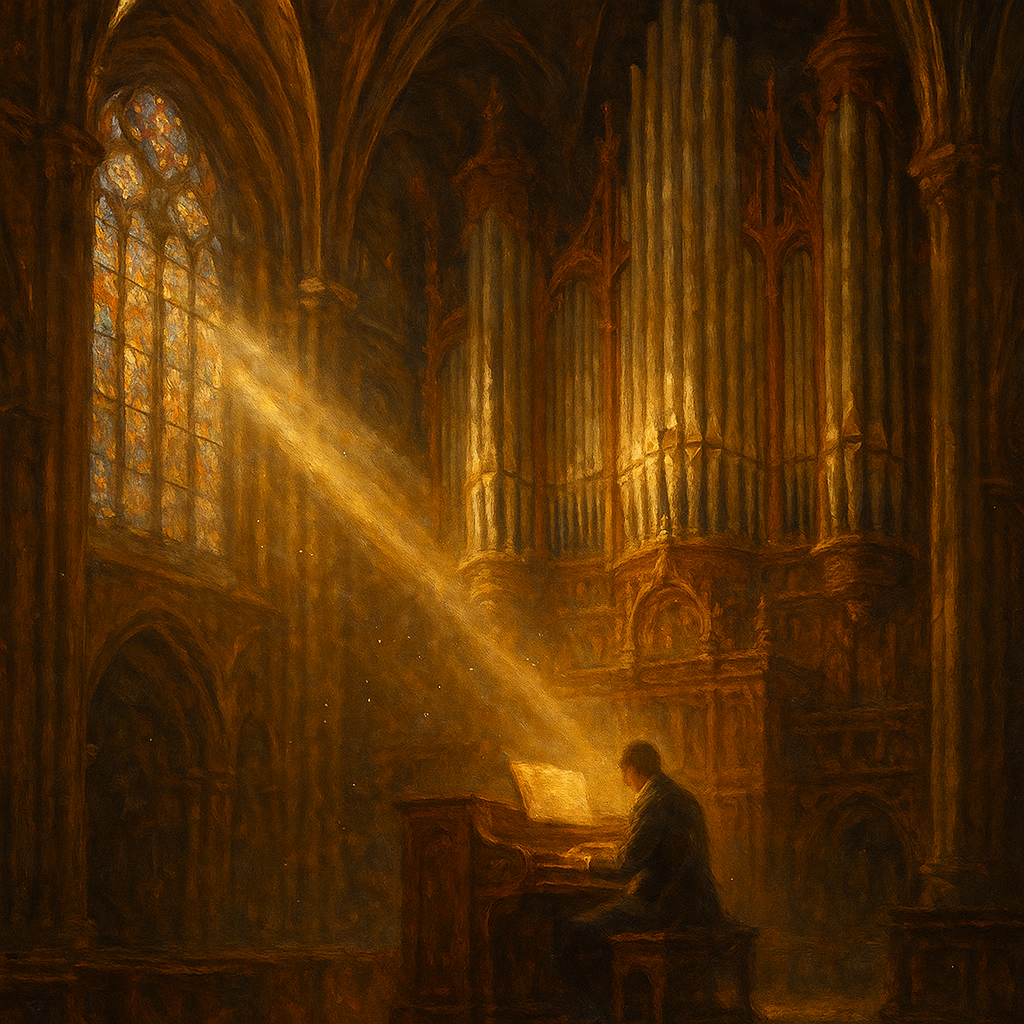
Scene 1: A grand cathedral interior at golden hour, sunlight slicing through stained glass and illuminating a towering organ with gleaming pipes; dust motes hang in the air like musical notes, and a shadowy figure sits at the console, fingers blurred in motion — cinematic, painterly, warm tones, dramatic perspective.
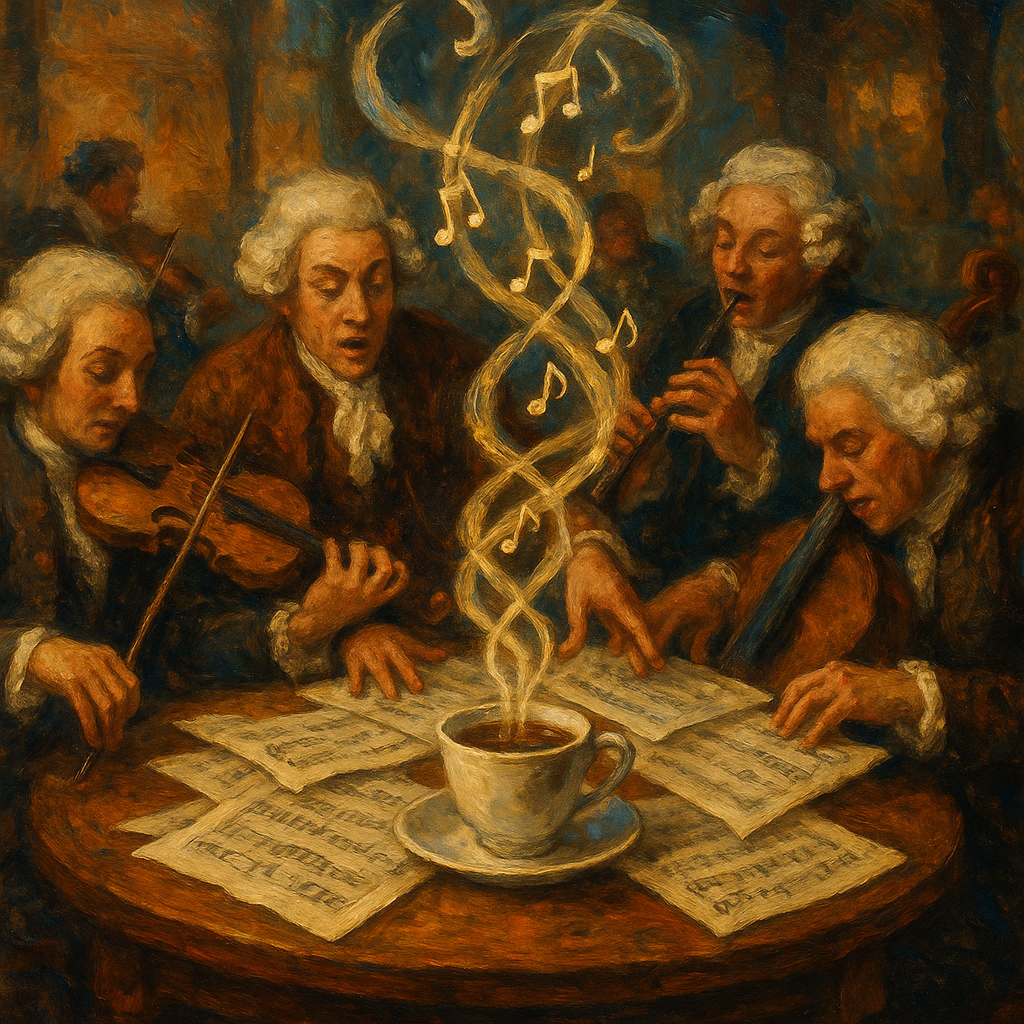
Scene 2: A whimsical baroque coffeehouse: powdered-wig musicians spill sheet music onto a wooden table where a steaming cup of coffee sits, musical notes escaping the cup as luminous ribbons that weave and overlap like voices in a fugue; playful, textured brushstrokes, rich browns and deep blues, lively convivial atmosphere.
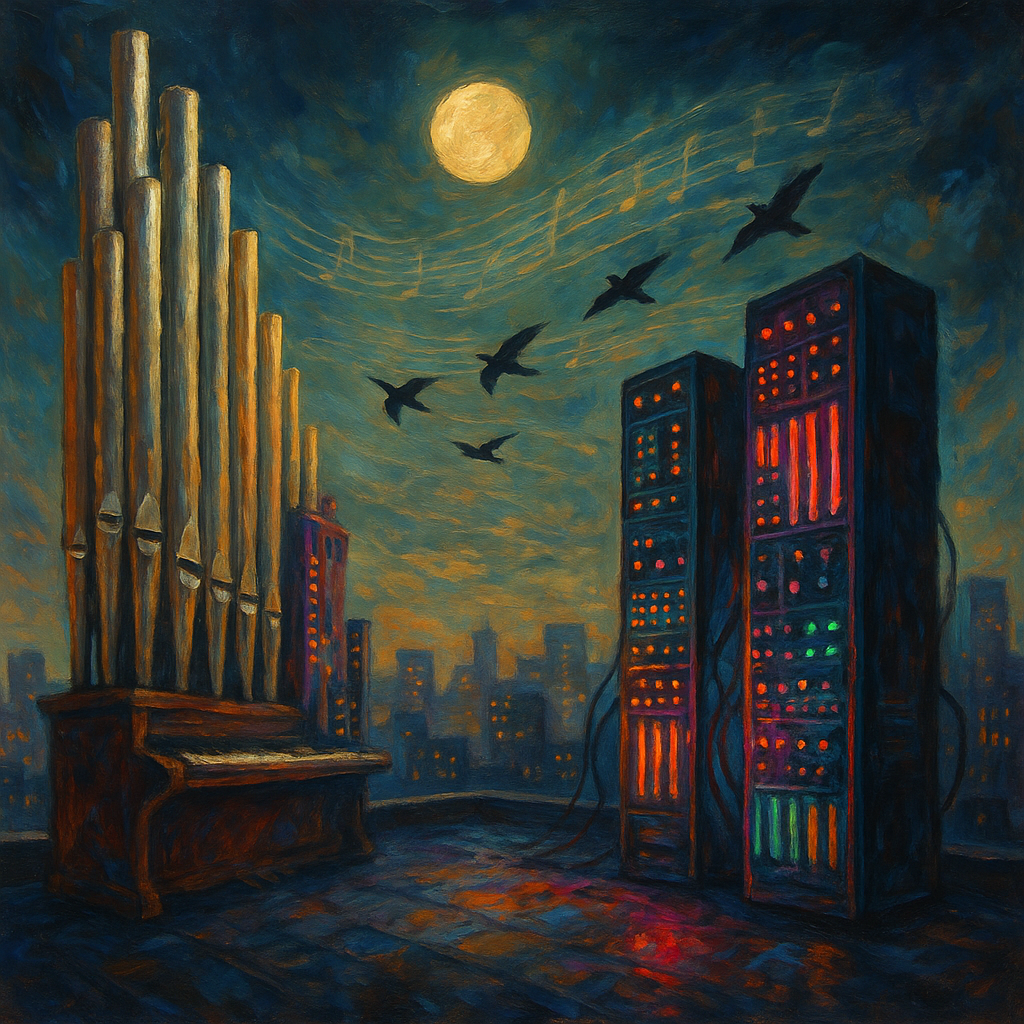
Scene 3: A surreal, modern collage: giant organ pipes morph into neon synthesizer towers on a moonlit rooftop, silhouetted birds trace counterpoint lines across the sky like written staves, and faint echoes of sheet music ripple across the city skyline — vibrant colors, cinematic contrasts, fantastical and fun.